
by Carol Hyman
If you’re going to borrow, borrow from the best. So how about this? “It was the best of times, it was the worst of times, it was the age of wisdom, it was the age of foolishness, it was the epoch of belief, it was the epoch of incredulity, it was the season of light, it was the season of darkness, it was the spring of hope, it was the winter of despair…”
Life has always been a mixed bag, as Charles Dickens so eloquently pointed out. But in the past it used to be easier to ignore other people’s suffering. These days, with satellites beaming images from one side of the planet to the other – of war, famine, natural disasters, ghastly diseases, and inconceivable cruelty – we get such vivid pictures of the forms human suffering takes that we can want to tune out. What’s a human to do?
We can face facts. Sometimes things fall apart and sometimes things come together. Or so it appears, from our point of view. Actually, things are always simultaneously falling apart and coming together. Order and entropy. Stability and disruption. Organization and chaos. And in the midst of all that change, people try to carve out meaningful and satisfying lives.
Then there’s the more subtle suffering that rarely makes the news but you can see on people’s faces, maybe even when you look in the mirror. Like the phantom ache amputees describe, this pain arises from the absence, not of a limb, but of the wisdom of the human heart. Something is missing and we know it.
We could look to science for answers. But what physics tells us about the very strange nature of reality might give us pause if we actually try to apply it in our lives. Assuming that things are as they seem to be is what social psychologists call naïve realism. A more nuanced perspective would take into account what we now know about space and uncertainty. If we learn to let go of our entrenched preconceptions and habitual patterns, we can experience each moment arising, fresh and up to date. We can learn how to rest in the space we inhabit and connect with the wakeful presence.
Wakeful presence is the source of the wisdom we need to navigate the best and worst of times. Our inner and outer perceptions can merge in open awareness and bring insight. When this happens we become vehicles by which the universe is bringing it all back home. We constantly deliver creation into experience. Or experience into creation. And words like relativity, multi-dimensionality, and entanglement become more than mere concepts. We start to actually experience the fact that matter really is just energy that has coalesced in space. And there’s so much space. Around us and within us. No wonder all our efforts to nail things down seem to keep dissolving. No wonder we try so hard to hold on.
So where do we find wakeful presence with its wisdom that will guide us through the groundless ever-shifting landscape of life? Ironically, the answer is that it’s so close that you could say it’s hiding in plain sight. Our condition is as if we were dying of thirst while sitting on top of a vast, barely concealed reservoir. Dig down just a bit and water will spring forth, fresh and plentiful beyond our wildest dreams. But if we don’t know it’s there, or can’t find the tools to dig, we wither away, sensing all the while that something isn’t right.
When a body is dehydrated, the person often doesn’t feel thirsty and instead develops a headache, or weakness and dizziness. Likewise, we may not know what it is that ails us. We just have a vague sense that something is missing from our lives. Indeed, we may feel we are missing our lives altogether, caught up in the speed and tedium of daily existence. Are our actions worthwhile? What meaning is there in our moments and days? To make ourselves feel better, we spin stories about what we are doing. Often we even believe them. Until things fall apart and we’re back where we started.
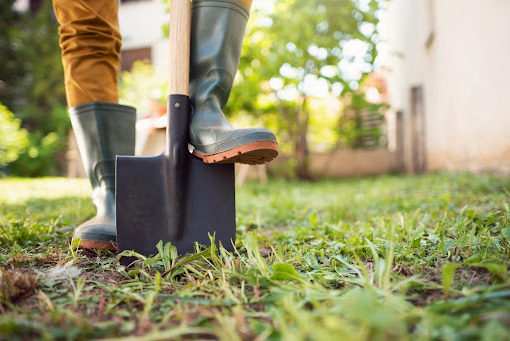
Maybe it’s time we start digging? We could dig into our own experience. We could stop distracting ourselves and embrace our condition. People try to cling to youth not only because of a fear of death but also because we see in the young – and perhaps remember from our own early days – the sense of promise, of something strong and fresh and vital. We long for that vitality. We want to feel a sense of power and presence, to connect with the world. We want to be fully human.
In our heart of hearts, we want to come together, to be comfortable in our own skin, to ease discomfort in others, and to help make the world around us a better place for the people who will come after us on this beautiful and fragile planet. Mindfulness is the tool we use to tap the reservoir. That reservoir of kindness and wisdom is our human inheritance. Claiming it is our best shot at a better future.
So, what’s a human to do? That’s a good first question. Life is a trip. How’s your vehicle? What experience are you delivering into creation? What sort of reality do you manifest? We all convey into this world a splendid – or not so – blend of decency and confusion. Sit down and make friends with yourself. Learn to recognize what you carry with you. Then ask yourself what’s called for now, in this moment, in these circumstances.
Sometimes it’s time for things to fall apart. And sometimes it’s time to come together. Tapping our inner resources calls for hard work. It takes discipline to break the habits of a lifetime. But if we dig deep and meet the challenge of this time – the time of our lives – we might discover that it is a far, far better thing than we ever could have imagined.